
Earth’s Moon is the only place beyond Earth where humans have set foot.
The brightest and largest object in our night sky, the Moon makes Earth a more livable planet by moderating our home planet’s wobble on its axis, leading to a relatively stable climate.
It also causes tides, creating a rhythm that has guided humans for thousands of years. The Earth and Moon are tidally locked such that their rotations are so in sync we only see one side of the Moon. Humans didn’t see the lunar far side until a Soviet spacecraft flew past in 1959.
The Moon was likely formed after a Mars-sized body collided with Earth. It therefore has a solid, rocky surface cratered and pitted from impacts by asteroids, meteorites, and comets.
The Moon was the first place beyond Earth humans tried to reach as the Space Age began in the late 1950s. More than 100 robotic explorers from more than half a dozen nations have since sent spacecraft to the Moon. Nine crewed missions have flown to the Moon and back. The former Soviet Union logged the first successes with its Luna program, starting with Luna 1 in 1959.
NASA followed with a series of robotic Ranger and Surveyor spacecraft that performed increasingly complex tasks that made it possible for the first human beings to walk on the Moon in 1969. Twenty-four humans have traveled from the Earth to the Moon. Twelve walked on its surface. The last human visited the lunar surface in 1972.
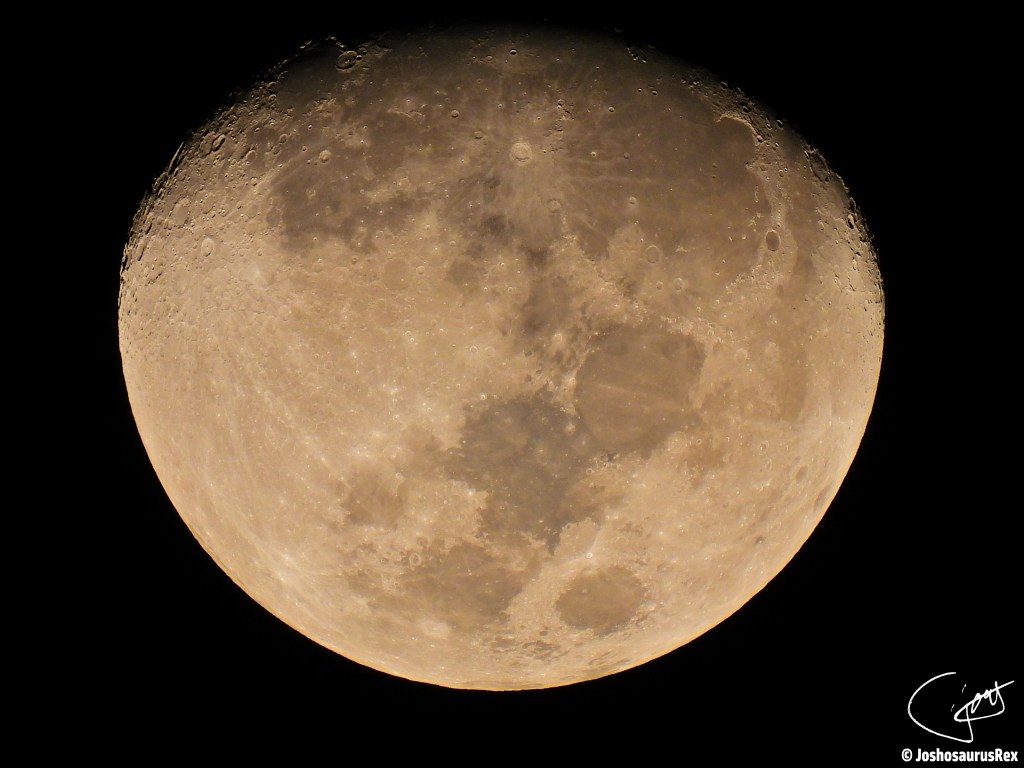
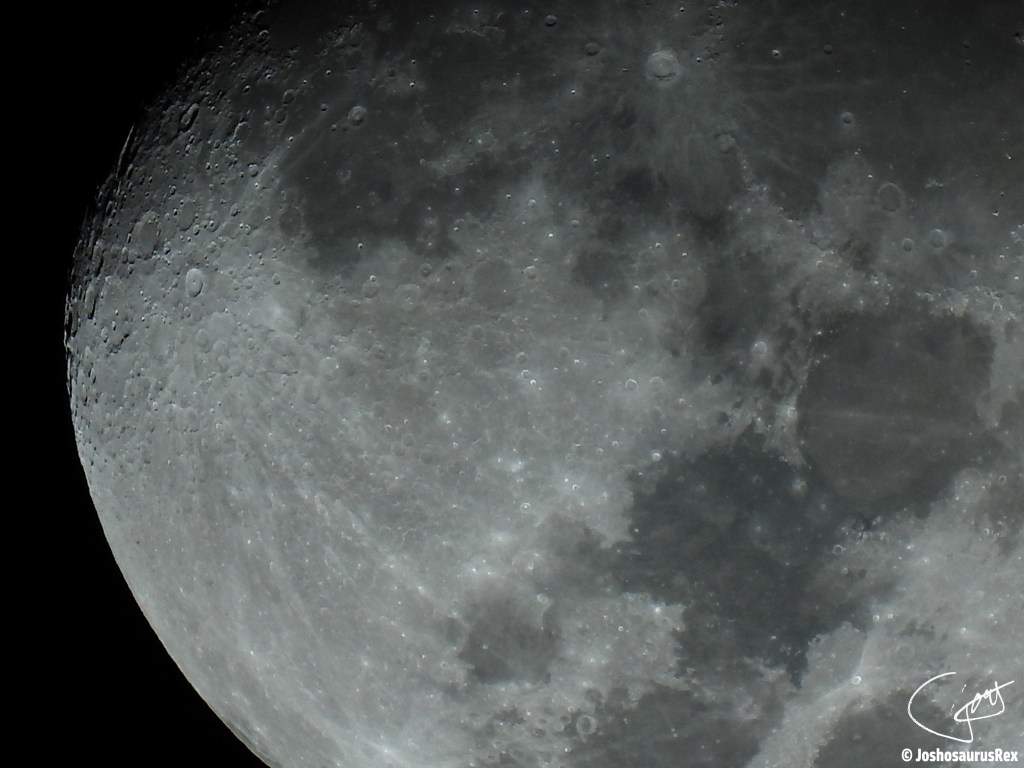
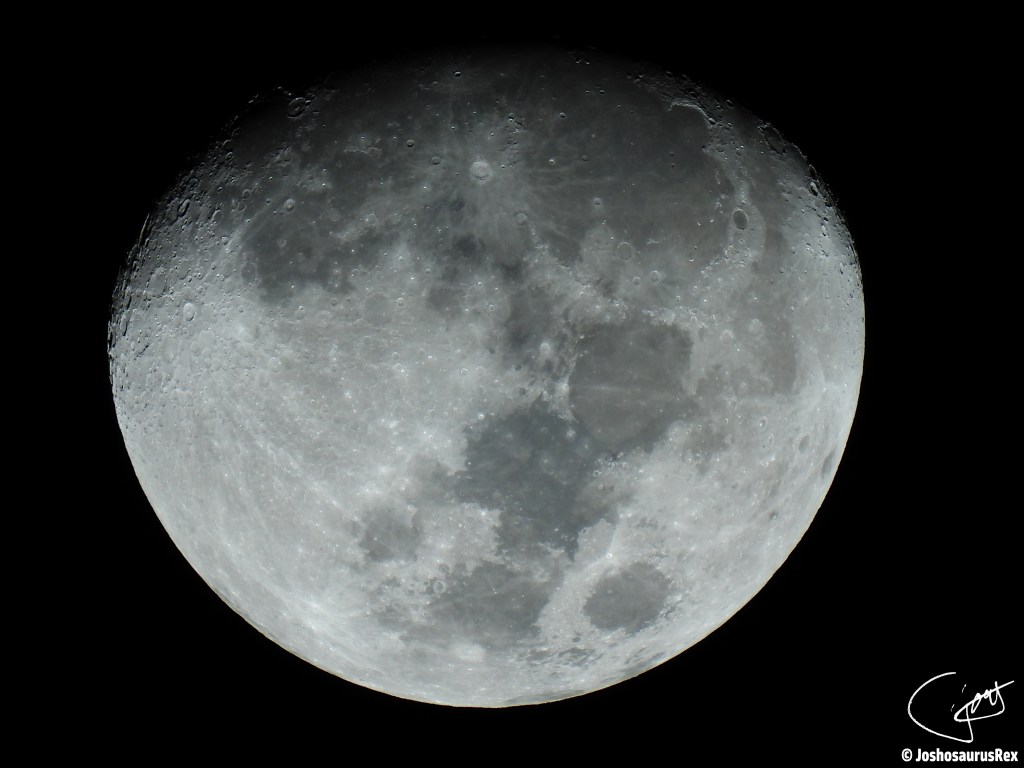
Below are images shot with the Nikon Coolpix P950 with its amazing 2000 mm zoom.

See images of other planets here.
 Joshosaurus' Wanderings
Leave a comment